Seneca on time: what “we waste a lot of it” means
Read Seneca’s quote in its source context, then use a practical time-allocation exercise to protect attention without turning rest into another productivity target.
 Jeff Hopp 2 min read
The wording below appears in C. D. N. Costa’s translation of Seneca’s On the Shortness of Life. English versions vary, so the translator matters when citing the sentence.
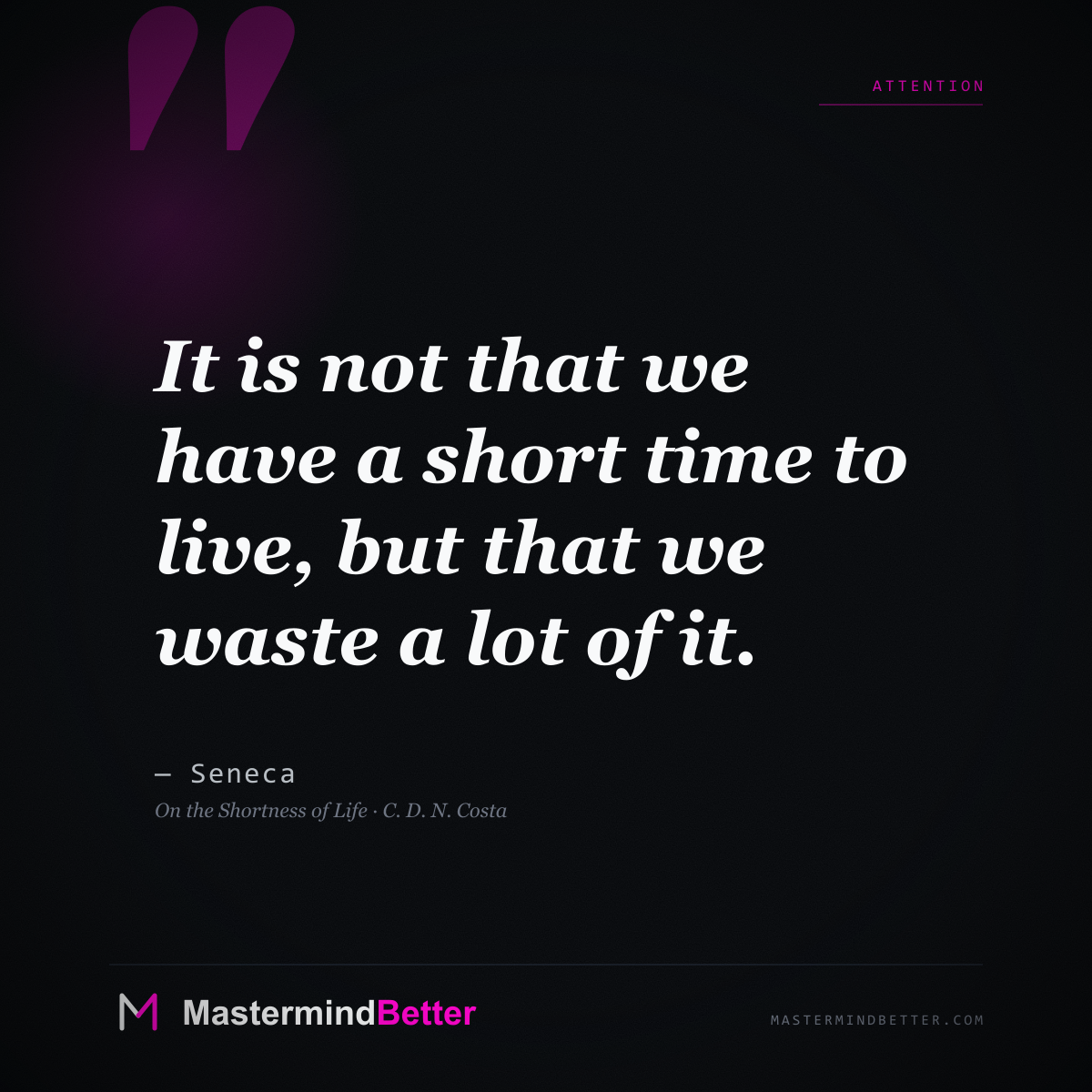
It is not that we have a short time to live, but that we waste a lot of it.
— Seneca · Read the source
What the quote asks of us
Seneca shifts attention from how much time a person receives to how that time is used. The distinction is useful, but it can become harsh when treated as a verdict on someone else’s life. Caregiving, illness and limited control over working hours are real constraints. An hour that looks unproductive from the outside may be necessary or deeply valuable.
The practical question is personal: where do your commitments and your attention disagree? You may say that an important conversation matters while leaving it to whatever time remains. You may also be working continuously while neglecting the rest that makes your work possible. Neither problem is solved by squeezing another task into the day.
Protect an hour before adding a habit
Try this with a calendar and one sheet of paper:
- Name one thing that deserves your attention this week. Make it concrete: preparing a decision, calling a friend, reading a difficult chapter or resting.
- Reserve an hour, or a smaller interval that is realistic for your circumstances.
- Identify what you will defer, shorten or decline to protect that time.
- Decide what would tell you the time was well spent. That might be a decision reached, a person heard or simply a period of genuine rest.
This is an allocation exercise, not a competition to produce more. If the hour does not happen, examine the constraint before blaming your discipline.
Bring the same care to a group’s time
A meeting consumes everyone’s attention at once. If six people attend an hour-long session, each has given an hour that could have gone elsewhere. Respect that contribution by deciding what the meeting is for before it begins.
For example, a group reviewing a member’s project could spend the whole session hearing updates. A more useful plan might circulate the updates first, identify one decision and reserve most of the conversation for it. The aim is to make the time fit the purpose, not to make every conversation faster.
Use the free mastermind meeting agenda to give a real decision room in the schedule. Keep the broader quote collection for other perspectives on attention and action.
Share the idea. Keep the context.
Send the quote card with a link to this interpretation, or save the image for later.